Live Hive Data
Featured
Posted in Uncategorized
Posted in Uncategorized
10 Sunday Nov 2024
Posted in Uncategorized
Preliminary results of Europe-wide research on honey bee diversity – INSIGNIA-EU Project
The posters below are from Norman Carreck, former Science Director of IBRA [International Bee Research Association]. This information was presented at the EurBee Conference in September 2024. The UK samples are part of a sampling programme already taken from 315 apiaries in 27 EU countries.
The information is detailed and of interest to anyone who wishes to know more about native or near native dark bees. From the pie-chart information on the distribution maps, it is clear that the native Northern European honey bee (Amm – Apis mellifera mellifera – the M-lineage, for example, our native or near native dark Welsh honey bee) is mainly restricted to the western areas of Europe, i.e. in Great Britain, the Iberian peninsula, and with a concentration in Ireland. In most of the other Western European countries C-lineage bees, native to Eastern and Southern Europe, have been introduced and largely replace Amm. Well-known C-lineage subspecies are Apis mellifera carnica (‘Carnies’) and Apis mellifera ligustica (‘yellow’ Italian bees). This detailed research highlights the significance and importance of locally adapted dark bees that we know are genetically very near to Apis mellifera mellifera.
Norman Carreck provides this summary of the preliminary results of the samples from Great Britain:
The overall averages for the 36 samples from Great Britain were: For DeepWings (ie wing morphometry): 65% M lineage and 35% C lineage; and for mitochondrial DNA: 42% M lineage, 50% C lineage and 8% A lineage. The A lineage results don’t mean that there is actually African material present, but probably represent Am iberiensis. A soon to be published paper will show that Irish Amm samples are much more closely related to Am iberiensis than samples from mainland Europe, which makes sense. In more detail, for Great Britain (it says UK on the poster, but the samples were all from Great Britain – samples from Northern Ireland were included in Ireland) were 50% Am mellifera, 17% Am iberiensis, 20% Am carnica and 13% Am ligustica. For comparison, the APHA Random Apiary Survey carried out all over the UK about 15 years ago showed an average of 42% Amm.
The results also show that Ireland has bees with the highest percentage of Amm in Europe.
Maternal origin of honeybee (Apis mellifera) colonies from across Europe – EurBee-poster-285_lopes-et-al.pdf
Wing geometric morphometrics of European honey bee populations – EurBee-poster-289_costa-et-al.pdf
02 Saturday Nov 2024
Posted in Uncategorized
Lecture given at the British Beekeepers’ Association (BBKA) Spring Convention 2023
This lecture introduces the audience to a brief overview of the science of Varroa resistance, followed by four personal journeys of UK beekeepers who have been managing Varroa resistant colonies. Prof Stephen Martin has been studying Varroa mites for almost 40 years and is internationally respected in the areas of Varroa biology, viral transmission, chemical ecology, and the impact of Varroa on honey bees. More recently he has travelled extensively researching the evolution of Varroa resistance. His co-presenters, Clive Hudson, Rhona Toft, Joe Ibbertson & Steve Riley, have been managing Varroa resistant colonies for between 5 and 14 years.
https://www.varroaresistant.uk/
01 Wednesday Feb 2023
Posted in Uncategorized
14 Years of Treatment-Free Beekeeping – Our Experience – Clive Hudson
An online presentation to Canterbury Beekeepers, Kent BKA 25th January 2023
14 Wednesday Sep 2022
Posted in Uncategorized
Three articles on treatment-free beekeeping were published in BBKA News No 229 July 2022. They document the experience of treatment-free beekeepers and some of the latest research.
28 Monday Mar 2022
Posted in Uncategorized
A general article on the wild honeybees of Snowdonia, North Wales, and their intimate association with ancient woodlands of the area.
The wild honeybees of Snowdonia (2021) – by Clive Hudson
16 Saturday Oct 2021
Posted in Uncategorized
As an introduction to natural varroa-resistance there is an excellent interview with Isobel Grindrod, University of Salford
https://www.bbc.co.uk/programmes/m000yfkv
Isobel gives a very clear explanation of the behavioural traits being used by honey bees to cope with the mites.
Here is a transcript I’ve done (5 August 2021).
12 Thursday Nov 2020
Posted in Uncategorized
Treatment-Free Beekeeping by Clive & Shân Hudson 2020 as published in BBKA News No. 227 July 2020. Includes a concluding remark by Professor Thomas Seeley.
An earlier version of this article was published in Welsh Beekeeper 206, Winter 2019.

27 Saturday Jun 2020
Posted in Uncategorized
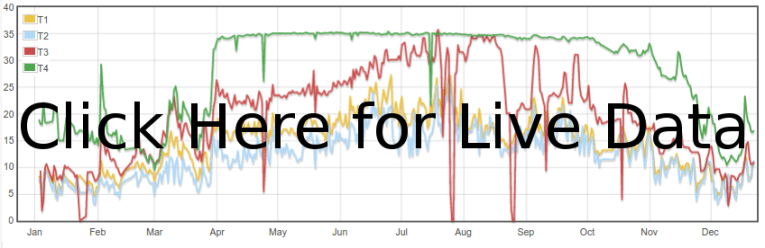
Our bee monitor was recently featured in Raspberry Pi’s magazine and on their blog: ‘BeeMonitor’, The MagPi 94 (June 2020).
Available on the Raspberry Pi Blog: https://www.raspberrypi.org/blog/monitoring-bees-with-a-raspberry-pi-and-beemonitor/
Available as a pdf: https://magpi.raspberrypi.org/issues/94/pdf

19 Thursday Dec 2019
Posted in Uncategorized
This article is an update of our experience of Treatment Free beekeeping.
11 Years of Treatment Free Beekeeping by Clive & Shan Hudson as published in Welsh Beekeeper 206, Winter 2019.
02 Tuesday Apr 2019
Posted in Uncategorized
“Varroa Has Lost its Sting – Our Experience of Treatment Free Beekeeping”
Presentation given at Welsh Beekeepers’ Convention at the Royal Welsh Showground, Builth Wells on 30th March 2019 to an audience of approximately 165. This presentation is similar to that given at the BIBBA Confernce 2018, but differs in two main aspects:
Following the presentation, I was joined by Joe and Chris Ibbertson for a lively Q&A session.
Varroa Has Lost its Sting – Our Experience of Treatment Free Beekeeping – WBKA Conference 2019, Builth Wells
 BeeMonitor